

Your Questions, Answered
-
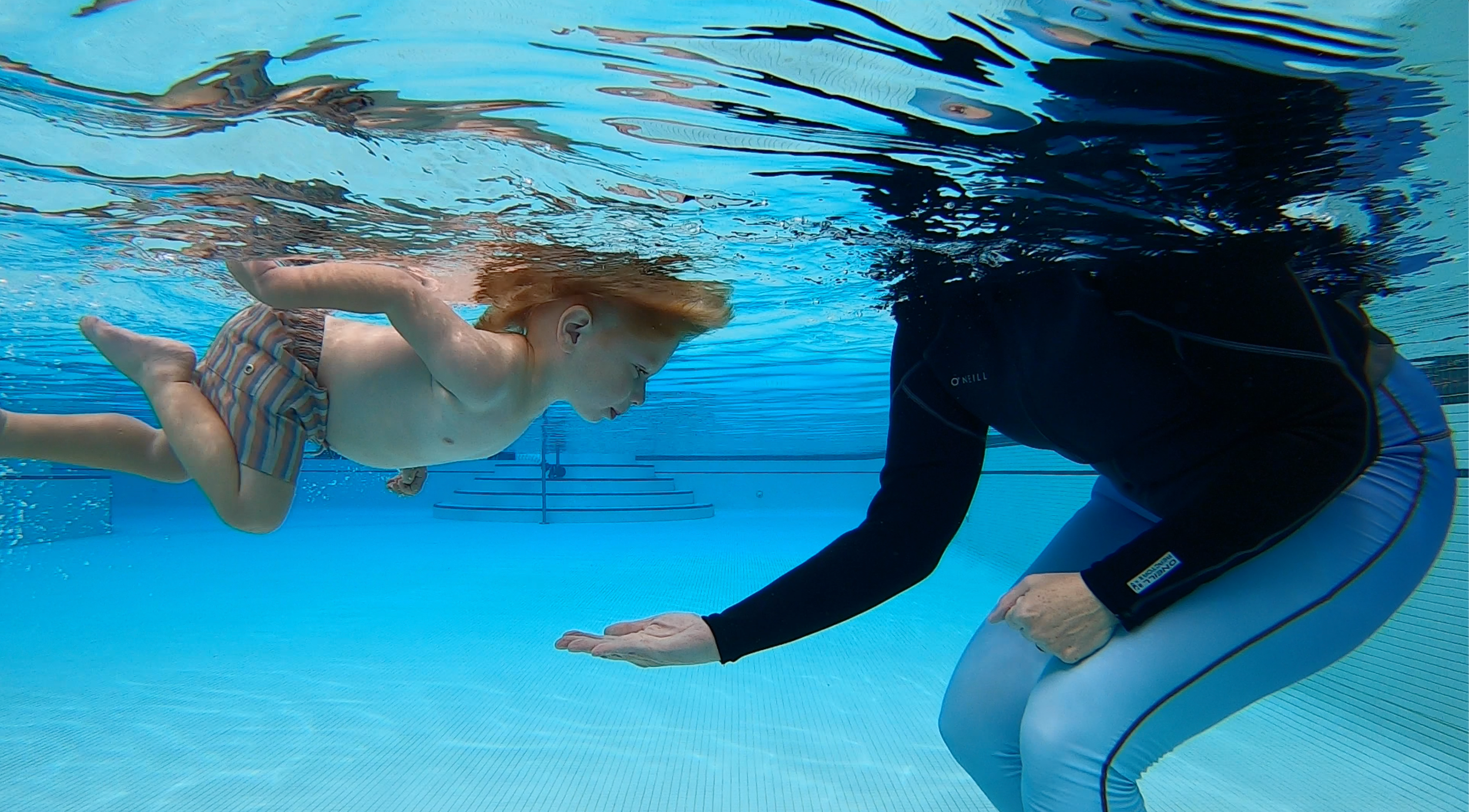
Infant Swimming Resource (ISR) is the product of almost 60 years of continuous refinement in the area of aquatic survival instruction for infants and children. ISR's primary focus is to teach your child to become a productive swimmer or floater in any depth of water. The goal of ISR is that your child becomes an "aquatic problem solver." ISR Self-Rescue® lessons will greatly increase your child's chance of surviving an aquatic accident, even when fully clothed!
-
Yes! At Float First, we believe that part of water survival for a child who can walk is swimming. Children learn the swim-float-swim sequence so that they can get themselves to safety if they ever find themselves alone in the water. In our program they will learn both swimming AND survival skills, along with the tools they need to become an aquatic problem solver.
-
ISR Self-Rescue® skills are developed just like any other sensorimotor skill. When learning to walk, crawl, or even ride a bike, it is practice and repetition that lead to success. Repetition and consistency are crucial elements of learning for young children, and research shows that short, frequent lessons result in higher retention. Practicing ISR Self-Rescue® skills on a consistent, frequent basis allows for muscle memory to form, and muscle memory is what allows your child to self-rescue as soon as they hit the water.
Most children also have fairly short attention spans, and we want to take advantage of the best span of time for effective learning. Additionally, though the pool temperature is maintained between 78-88 degrees, the temperature is still lower than your child’s body temperature, and they will inevitably be losing some body heat. Instructors check students regularly for temperature fatigue during lessons, since this is an early indicator of physical fatigue, and lessons are kept brief to avoid this potentiality.
-
YES! ISR is dedicated to safety, and we maintain numerous safety protocols to ensure safe lessons. Your child’s health and well-being are our highest priority and are closely monitored on a daily basis. In addition, your child’s medical and developmental history is a mandatory part of the ISR national registration process, all of which is held strictly confidential. All ISR instructors undergo an intensive and rigorous training that far exceeds any other training program of this kind. Each ISR instructor is also required to complete an annual re-certification process that includes quality control assessments as well as continuing education.
Education about aquatic safety for your entire family is an integral part of your child’s lessons. You will receive access to the “Parent Resource Guide”, written by Dr. Harvey Barnett and JoAnn Barnett, which covers every aspect of swimming for infants and children. With a bit of research, you will find that ISR is not only the safest survival swimming program, but also the most effective program for teaching infants and young children essential self-rescue skills.
-
Children often fuss or cry during the first few lessons because they are in a new environment and around new people. For most children, crying is developmentally appropriate, and sometimes, their only way of communicating. The cry we hear in lessons is often the same cry you get when you take away a toy, don’t let them eat dirt, or put them into their car seat when they aren’t quite ready to go. It’s a protest, and it’s their way of saying that they aren’t happy with the situation. Typically, once your child gains confidence in their new skills, the crying diminishes. ISR instructors are used to this very common behavior, so don't be concerned about tears interfering with lesson progress.
-
You’re in luck! Parents do not get into the pool for lessons. However, we do encourage parents to sit poolside and cheer on your little ones. You are their biggest fans after all!
Parents will be invited into the pool during the last week of lessons (this will be discussed with your instructor beforehand). During this time, we teach you how to maintain and properly promote your child’s new ISR Self-Rescue® skills in the water.
-
Since 86% of children who fall into the water do so fully clothed, we want our students to have experience with just such a scenario. We have our students practice swimming in clothes during the last week of lessons, once they are fully skilled. If you have ever jumped in the water with clothes on, you know that there is a significant difference in the weight and feel of your body in clothes as opposed to a bathing suit. If a child has experienced the sensations of being in the water in clothing prior to an emergency situation, he/she is less likely to experience panic and will be able to focus on the task at hand.
-
Based on our research, we know that refresher lessons are important because children change so much, both cognitively and physically, during the first 5 years of life. It is important that their water survival skills grow with their bodies. Frequency of refresher lessons depends on the child's age, growth rate, skill level, and confidence level. The goal of refresher lessons is to help your child adjust his/her new body size and weight to his/her existing skills. This is especially important if your child has not had a lot of opportunities to practice their aquatic skills between seasons.
-
Lessons are held in a private, heated pool in the Del Cerro / San Carlos neighborhood of San Diego. Conveniently located less than 5 minutes off of I-8 at College Ave. and just minutes away from Lake Murray Community Park—where there is a GREAT playground for after-lesson adventures!